
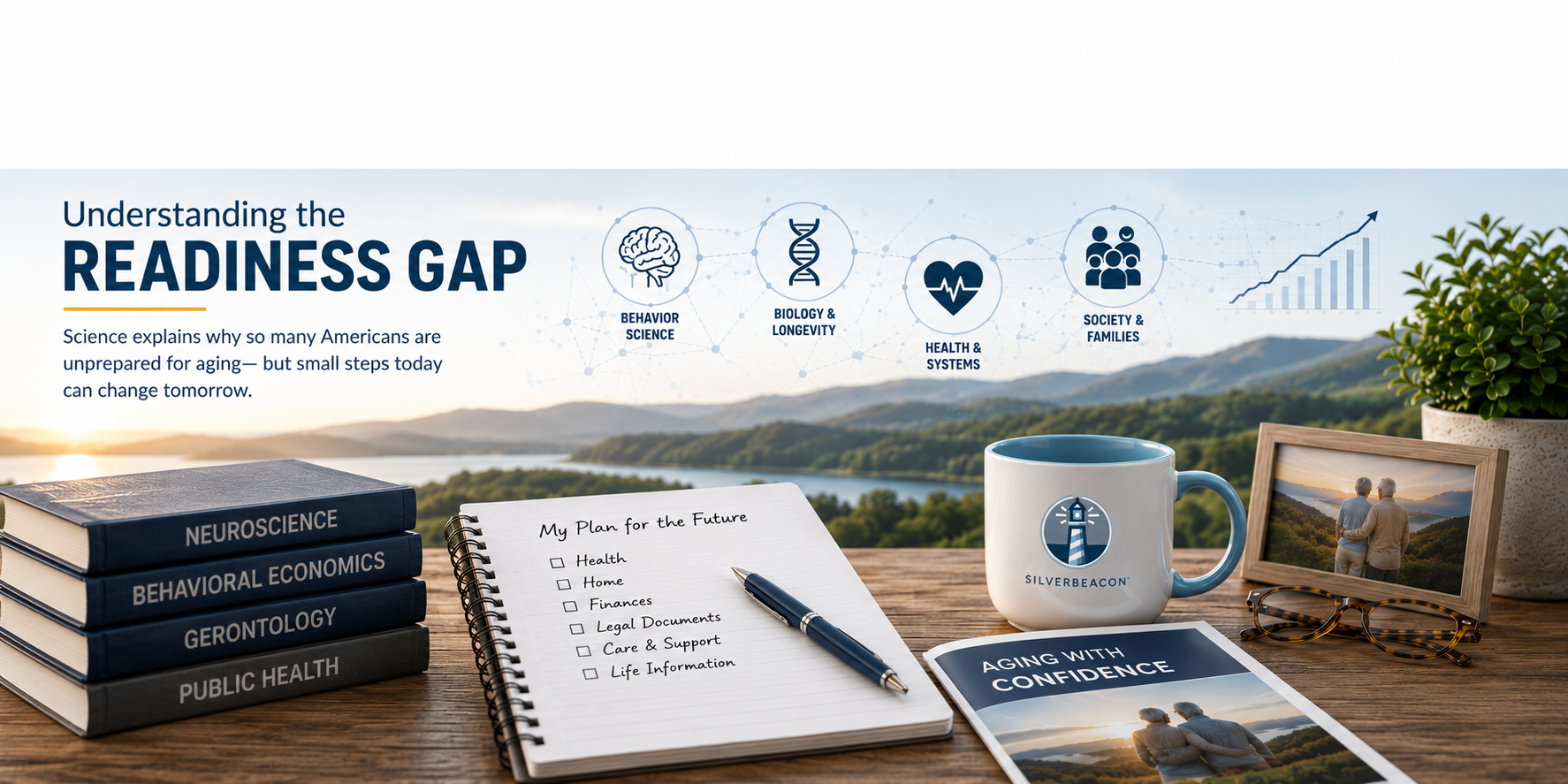
The 10 Science-Backed Reasons Americans Are Unprepared for Aging
Aging readiness is not just about money. Research shows it is also shaped by psychology, behavior, family systems, health, housing, and the complexity of modern life.
1. We Focus on Today, Not Tomorrow
Research: The brain naturally prioritizes immediate needs over future risks.
What to do: Complete one small readiness task each month, such as organizing passwords, legal documents, or medical contacts.
2. Aging Conversations Feel Uncomfortable
Research: People often avoid topics tied to aging, illness, dependency, and death.
What to do: Start family conversations early and frame them around independence, clarity, and peace of mind.
3. Life Has Become Too Complex
Research: Cognitive overload makes it harder to organize paperwork, accounts, healthcare, insurance, and digital life.
What to do: Create one trusted place for key information: documents, accounts, contacts, wishes, and instructions.
4. We Underestimate Future Challenges
Research: The planning fallacy causes people to underestimate how difficult future care, housing, and family decisions may become.
What to do: Talk through “what if” scenarios before there is a crisis.
5. We Are Living Much Longer
Research: Longer lives often mean more years managing health, mobility, housing, and support needs.
What to do: Plan for living into your 80s and 90s, not just retirement at 65.
6. We Think Problems Happen to Other People
Research: Optimism bias leads people to underestimate their own risk of falls, illness, cognitive decline, or care needs.
What to do: Review home safety, legal documents, healthcare wishes, and backup support before they are needed.
7. Families Are More Disconnected
Research: Families are smaller, busier, and more geographically spread out than in past generations.
What to do: Identify who could help with finances, healthcare, transportation, advocacy, and daily support.
8. The Healthcare System Is Reactive
Research: Most healthcare systems respond after crisis rather than helping families prepare in advance.
What to do: Keep medical records, medications, doctors, insurance, and care preferences organized and accessible.
9. Decision Fatigue Wears People Down
Research: Too many decisions reduce mental energy and increase avoidance.
What to do: Simplify systems, automate recurring tasks, reduce clutter, and make important choices before stress rises.
10. Nobody Taught Us Aging Readiness
Research: Most people were never taught how to prepare for aging, caregiving, housing changes, or life administration.
What to do: Treat aging readiness like preventive health: learn early, assess gaps, and take small practical steps.
How SilverBeacon Can Help
SilverBeacon helps individuals and families identify readiness gaps before a crisis occurs. Our assessments and practical tools help organize the key areas of aging readiness: life administration, home and lifestyle readiness, support systems, caregiving preparation, and important legal, financial, medical, and digital information.
The goal is simple: less chaos, more clarity, and greater peace of mind for seniors and the people who love them.
Contact SilverBeaconSources
- Temporal discounting and present bias research, including studies on future-oriented decision-making and health behaviors.
- Terror Management Theory research on mortality avoidance and end-of-life decision-making.
- Research on the planning fallacy and optimism bias, including work associated with Daniel Kahneman and Amos Tversky.
- Studies on optimism and planning for future care needs among older adults.
- National Academies research on social isolation and loneliness in older adults.
- National Institute on Aging research on loneliness, social isolation, cognitive decline, and health risks.
- CDC fall prevention research for adults age 65 and older.
- Research reviews on home modifications, fall prevention, and aging in place.
- Healthspan-lifespan gap research, including findings that Americans may spend many later-life years in poor health.
- Decision fatigue and cognitive load research showing how repeated decisions reduce decision quality and increase avoidance.